
Criminal Case: Save the World!
Pretty SimpleAdventure
4.76.28K Reviews
- Version
- 2.45.1
- Installs
- 10.00M
- Age Rating
- Teen
Screenshots

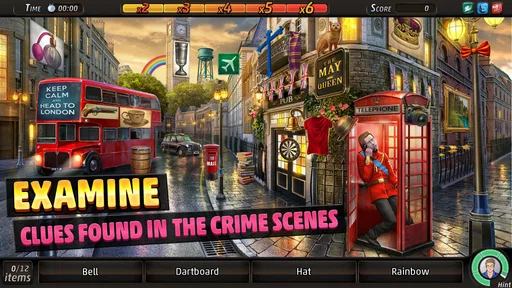

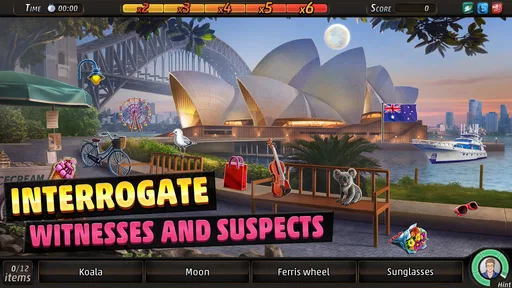

Our Review of Criminal Case: Save the World!
 Analysis by Appyee
I expected a straightforward hidden-object game when I first opened Criminal Case: Save the World!, but its appeal is more specific than that. It turns murder investigations into a repeating routine: inspect a scene, tap useful evidence, receive immediate feedback, earn progress, and then return to the case because the next clue is waiting. That rhythm is the real reason I kept playing. The story gives each short puzzle a purpose, while the investigation format makes even a brief session feel like it has a clear beginning and end.
Created by Pretty Simple, this free adventure game focuses on solving cases in different parts of the world. It is aimed at Teen players, and its mature crime theme is important to understand before installing it. The presentation is stylized rather than realistic, but the subject matter still involves murder investigations, suspects, evidence, and crime scenes. I would recommend it to someone who enjoys casual detective games more than action-heavy adventures, especially if they like playing in small bursts instead of committing to a long uninterrupted campaign.
How the investigation loop feels in everyday play
I use the investigation loop as a quick way to judge whether a session is still enjoyable: if scanning the scene feels focused, I keep going; if I’m tapping without really looking, I take a break. That distinction matters because the game’s progress comes from attentive searching, not from rushing through clues. Next, I’ll look at the small setup checks that can make those searches easier to follow.
The first action: entering a scene with a clear job
The strongest part of the opening moment in each investigation is that I rarely wonder what I am supposed to do. A crime scene presents a visual search task, and my first job is to look carefully for the requested objects. I scan the image, compare shapes and colors, and tap what seems relevant. That sounds simple, but the scenes are busy enough to make careless tapping less effective than patient observation.
This is where the game separates itself from a conventional adventure title. I am not steering a character through a large world or solving every puzzle through dialogue choices. Instead, the adventure is built around evidence collection and the gradual movement of a case. The global setting gives the investigations a sense of travel, but the moment-to-moment activity stays focused on searching, identifying, and connecting the next piece of information.
I found it useful to divide the screen into sections rather than sweep randomly. I check the corners, then the center, then areas with similar colors or repeated shapes. When an object is partly hidden in a cluttered scene, slowing down is more valuable than tapping quickly. This is one of the less obvious strengths of the design: the game rewards visual discipline, not just fast fingers.
That first action also establishes the game’s tone. The crime scenes are presented as puzzles rather than as deeply simulated forensic workplaces. Anyone expecting detailed investigative procedures may find the approach light, but that simplicity helps the game work well on a phone. I can start a case without learning a complicated control system, and the objective remains understandable even when I have only a few minutes available.
Feedback: why every tap matters
The investigation becomes satisfying because the game responds quickly to progress. Finding the right item confirms that I am moving in the correct direction, while an incorrect tap immediately tells me to look again. That feedback keeps the search from feeling like a silent image quiz. Each successful discovery is a small signal that the case is advancing.
The feedback rhythm is especially helpful when the scene contains several similar objects. Instead of needing to remember every detail from the beginning, I can use each confirmed find to narrow my attention. The scene gradually becomes less intimidating because I know which parts have already been checked. This makes the game approachable for casual players, although the repeated searching can feel familiar once I have played several investigations in a row.
There is also a useful mental shift between looking for an item and understanding its role in the case. At first, I am simply identifying objects. After a few discoveries, I start thinking about what those objects might mean and why the investigation has directed me toward them. The game does not require me to build a complex forensic theory, but the sequence gives the search a narrative reason instead of making it feel completely disconnected.
My best practical tip is to avoid treating every scene as a race. Fast tapping can make the screen feel chaotic and may lead to wasted attempts or unnecessary frustration. I get better results by pausing after each confirmed object and checking the remaining areas with a fresh visual pass. This is a small change, but it makes the difference between a calm puzzle and a tiring one.
Reward: progress that gives the next case a purpose
Finding evidence is only satisfying if it leads somewhere, and the game connects each successful search to the broader investigation. Progress feels like a reward because it unlocks the next piece of the case rather than ending the activity immediately. I am not just collecting random objects; I am working toward another conversation, discovery, or stage in the investigation.
That structure creates a pleasant action-and-reward pattern. I search a scene, receive confirmation, move the case forward, and then get a reason to continue. The reward is not only the result of a single tap. It is the feeling that several small observations are building toward an answer. For a casual adventure game, that sense of accumulation is more important than elaborate controls.
The free-to-play model affects how I experience this progress. The game can be played without an upfront purchase, but optional in-app purchases range from $0.99 to $99.99 per item. That broad range means I would approach spending carefully. My advice is to decide in advance whether I am comfortable playing at the game’s natural pace, because the temptation to pay can become more noticeable when I want to continue immediately or move through a case faster.
I also think the reward system works best for players who enjoy gradual advancement. If you need every action to produce a major revelation, the individual searches may feel too small. The game’s pleasure comes from repetition with context: one clue leads to another, and the investigation keeps opening another modest objective. It is closer to reading a light episodic mystery in short installments than to playing a dramatic console detective adventure.
Session reset: why I keep coming back
A good mobile game needs a natural stopping point, and this one has several. I can finish a search, reach a case transition, or simply stop after making enough progress for one sitting. That makes it easy to fit into a commute, a waiting room, or a quiet break at home. I do not need to reserve an entire evening to feel that I completed something.
The reset between sessions is important to the loop. After closing the game, I can return with a fresh objective instead of trying to remember a complicated control combination or a large open-world map. The next session begins because there is another investigation step to complete. The previous reward creates curiosity, while the short format removes much of the pressure to play for a long time.
A realistic example is a short evening break after work. I might open the game intending to inspect one scene, search carefully, and stop once that task is finished. If the case has moved forward, I have a clear sense of progress. If I have more time, I can continue into the next activity. That flexibility is more convincing to me than the promise of endless content, because it respects the way many people actually use mobile games.
The reset can also expose the game’s main weakness. If I play for a long stretch, the repeated search pattern starts to feel less fresh. The same basic cycle remains enjoyable when separated by time, but it can become mechanical during an extended session. I would not choose this as my primary game for a long flight unless I already knew that I liked hidden-object repetition.
What makes the world setting matter
The international case framing gives the adventure a wider identity than a single-location detective game. Moving between investigations around the globe helps the cases feel like parts of a larger journey. It also gives the title a reason to use different environments and situations rather than returning to one familiar police station every time.
Still, the world tour is mainly a narrative and visual frame for the search mechanics. I would not install it expecting a travel simulator, a fully explorable world, or a branching role-playing game. The important question is whether the changing case context is enough to keep the core activity interesting. For me, it usually is when I play briefly, but it does not completely remove the repetition of searching scenes.
This distinction helps when comparing it with alternatives. A traditional puzzle adventure may offer more varied interactions, inventory combinations, or exploration. A hidden-object title without a crime story may feel gentler and less mature. A story-driven mystery game may provide deeper dialogue and deduction, but often asks for more uninterrupted attention. This game sits between those options: it offers a crime narrative with accessible visual puzzles and a mobile-friendly pace.
Who will enjoy it, and who should skip it
I think it is a good match for players who like spotting details, completing short objectives, and watching a larger case advance one step at a time. It also suits people who prefer a free starting point and do not mind optional purchases being part of the design. The published average rating is 4.7 from around 167 thousand ratings, and the game has passed 10 million installs, which fits my impression that its straightforward loop has broad casual appeal.
I would be more cautious recommending it to someone who wants action, deep character control, or highly demanding deduction. The game’s challenge comes primarily from observation and patience. It is not the right choice if you dislike scenes that ask you to find objects repeatedly, or if you want every clue to be solved through logical inference rather than visual searching.
The Teen content rating also makes it a poor choice for younger children, even though the controls are easy to understand. Parents should consider whether a murder-investigation theme is appropriate for the player. The stylized presentation may soften the subject, but it does not change the central focus on crime cases.
Practical advice before installing
The game is free to download, so the sensible approach is to treat the first sessions as a test of the loop rather than assuming you will enjoy the entire long-term structure. Pay attention to how you feel after several searches. If the small confirmations and case updates make you curious, the format is probably a good fit. If the scenes already feel repetitive, purchasing anything is unlikely to solve the underlying problem.
It is also worth checking the device requirement before installing. The current version is 2.45.1 and requires Android 7.0 or later. That makes compatibility straightforward for many Android users, but older devices may still offer a less comfortable experience depending on their general performance. Since the game relies on detailed visual scenes, a screen that is comfortable for careful searching is more important than raw speed alone.
I recommend playing with enough screen brightness to distinguish similar colors, but not so brightly that the scene becomes tiring. For difficult searches, I take a short pause instead of repeatedly tapping the same area. This preserves the observation element and helps me avoid turning a manageable puzzle into a frustrating guessing exercise.
Another useful habit is to stop at a natural case break rather than forcing one more scene when I am tired. Fatigue makes hidden objects blend together, and the game is more enjoyable when I return with fresh attention. The session-reset design supports this approach, so there is little benefit in treating every play period as a marathon.
My verdict on the complete loop
Criminal Case: Save the World! works because its loop is easy to understand but not entirely empty. The first action is a focused search, the feedback confirms each useful discovery, the reward moves the investigation forward, and the session reset leaves a clear reason to return. That sequence gives ordinary tapping a sense of purpose.
My main reservation is that the same strength can become a limitation. The predictable format is excellent for short, relaxed sessions, but it may not satisfy players looking for constantly changing mechanics. Optional purchases also deserve restraint, especially for anyone who tends to pay simply to remove a pause or accelerate progress. I see the game as most enjoyable when played at a comfortable pace rather than pushed aggressively.
With a 4.7 average and a large established audience, it is easy to understand why this adventure game has remained visible on mobile. My recommendation is specific: try it if you want a casual crime story built around visual searches and short investigations. Skip it if you need action, complex deduction, or a completely different puzzle type in every chapter. For me, the loop verdict is positive because each session ends with enough progress to feel worthwhile and enough unfinished mystery to make the next session tempting.
Verdict
Strengths of Criminal Case: Save the World!
- Short hidden-object scenes are easy to learn and quick to complete.
- Distinctive case themes keep the investigation variety interesting.
- Clue combinations add a small layer of reasoning beyond simple searching.
- Regular energy limits naturally encourage short play sessions.
- Works well for players who enjoy casual detective stories and puzzle games.
Limitations of Criminal Case: Save the World!
- Energy can run out quickly during longer investigation sessions.
- Some evidence searches feel repetitive after extended play.
- Progress may feel slow without watching ads or making purchases.
- The storyline is less compelling if you have not played earlier cases.
- Small objects can be difficult to spot on phones with compact screens.
Other Releases by Pretty Simple
View All
Criminal Case
Adventure4.6

Criminal Case: Pacific Bay
Adventure4.7

Criminal Case: Mysteries
Adventure4.6

Criminal Case: The Conspiracy
Adventure4.7
Similar Picks in This Category
View All
Roblox
Roblox Corporation4.2

Pokémon GO
Niantic, Inc.3.5

Ninja warrior: legend of adven
TOH Games4.6

Ninja Arashi
Black Panther4.6

Eyes - The Horror Game
Fearless Games sp. j.4.5

Critical Action:Gun Strike Ops
FPS Shooter & Action Game4.3
Frequently Asked Questions
What is Criminal Case: Save the World!?
Criminal Case: Save the World! is a hidden-object adventure game in which you investigate international crimes, examine evidence, question suspects, and solve murder cases. It follows the familiar Criminal Case formula but expands the story beyond one city, taking you to different locations and crime scenes. Progress depends on finding objects quickly, analyzing clues, and making the right investigative decisions.
How does the gameplay work in Criminal Case: Save the World!?
Each case combines hidden-object scenes, clue analysis, conversations, and occasional puzzles. You search crowded locations for items, earn stars based on your performance, and spend those stars to unlock investigations or perform forensic tasks. The game is easy to understand, although some scenes become challenging when objects are small, well hidden, or displayed under time pressure.
Can Criminal Case: Save the World! be played offline?
The game may allow limited access to previously loaded content, but an internet connection is generally recommended or required for downloading new cases, synchronizing progress, displaying advertisements, and using social or connected features. Players should not assume that the complete campaign works offline. Connecting regularly also helps ensure that progress is saved correctly across supported devices.
Is Criminal Case: Save the World! free to download and play?
Criminal Case: Save the World! is usually free to download, but it includes optional in-app purchases and advertising. Energy, stars, boosts, or other resources can affect how quickly you advance, so players who do not spend money may need to wait for items to regenerate or complete additional activities. The main experience can still be enjoyed without purchasing premium content.
Is Criminal Case: Save the World! suitable for children?
Although the game uses colorful graphics and simple controls, its subject matter is based on murders, criminal investigations, suspicious characters, and crime scenes. The presentation is not extremely graphic, but some themes may be unsuitable for younger children. Parents should also review the game’s advertising, social features, and optional purchases before allowing unsupervised play.
Play our best games!


